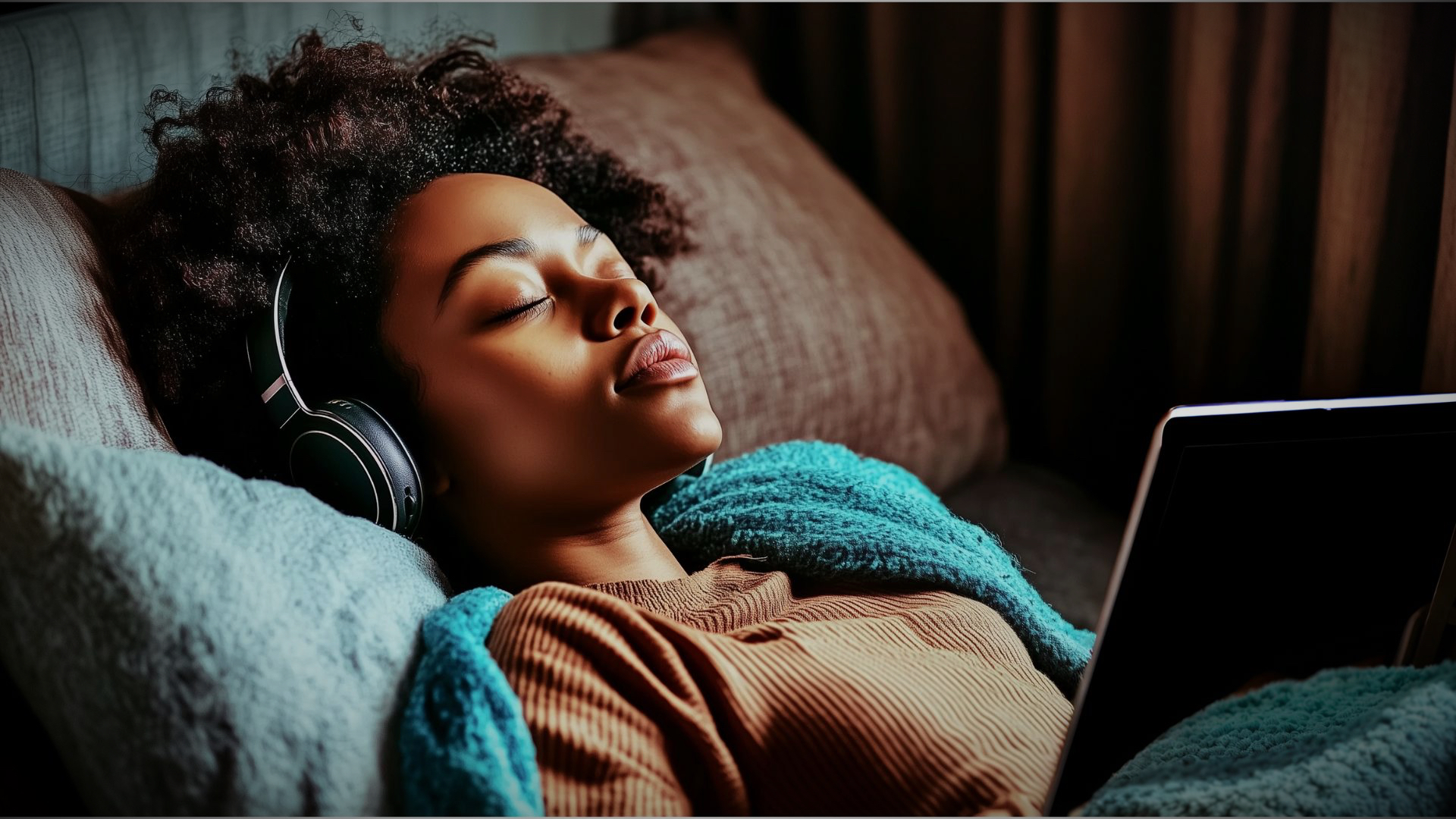
Why Sleep Is Essential for Your Brain and Body
Sleep is when your brain does its most important restorative work: consolidating memory, resetting creativity, and balancing emotions. During deep sleep, the brain activates the glymphatic system, which clears waste and toxins accumulated during the day — a process critical for long-term mental clarity and focus.
Sound can further enhance this process. Low-frequency sounds, like those in delta waves (0.5-4 Hz), encourage your nervous system to relax, synchronize brain rhythms, and promote restorative sleep.
Your Simple Evening Routine for Better Sleep
1. Unplug & Prepare Reduce screen time and bright lights 30 minutes before bed. This encourages melatonin production, helping signal to your body it’s time to rest.
2. Breathe & Release Take five slow, deep breaths, relaxing your shoulders with each exhale. Let the stress of the day melt away.
3. Listen & Drift Immerse yourself in a BE LIGHT session to guide your body and mind into a restful state.
How Sound Supports Sleep
Slow, rhythmic sounds help entrain your brainwaves, guiding them into natural sleep frequencies. Delta-range sounds (0.5-4 Hz) are particularly effective because they match deep sleep brain activity.
Research indicates that auditory stimulation using delta binaural beats can enhance slow-wave sleep, improve memory consolidation, and promote parasympathetic nervous system activation (Dabiri et al., 2022).
BE LIGHT sessions are designed to support this process, activating the rest-and-digest response, lowering stress hormones, and preparing your body for deep, restorative sleep.
Try the 5-Night BE LIGHT Sleep Challenge
- Choose a consistent bedtime.
- Unplug 30 minutes before sleep.
- Play a BE LIGHT sleep session each night.
- Notice how you wake up clearer, more focused, and energized.
- Repeat for five nights and track improvements in your sleep quality and daily energy.
FAQs
How much sleep do adults need? Most adults thrive on 7-9 hours per night to support focus, memory, mood regulation, and overall cognitive performance.
Can sound really help me fall asleep faster? Yes. Research shows that low-frequency sounds, delta waves, and binaural beats can improve relaxation, synchronize brain rhythms with natural sleep states, and enhance overall sleep quality.
When is the best time to use BE LIGHT sleep sessions? For optimal results, use sessions right before bedtime. You can also use them if you wake during the night to calm your nervous system.