Regulating the Nervous System: Why the Parasympathetic Response Is the Key to Real Stress Relief
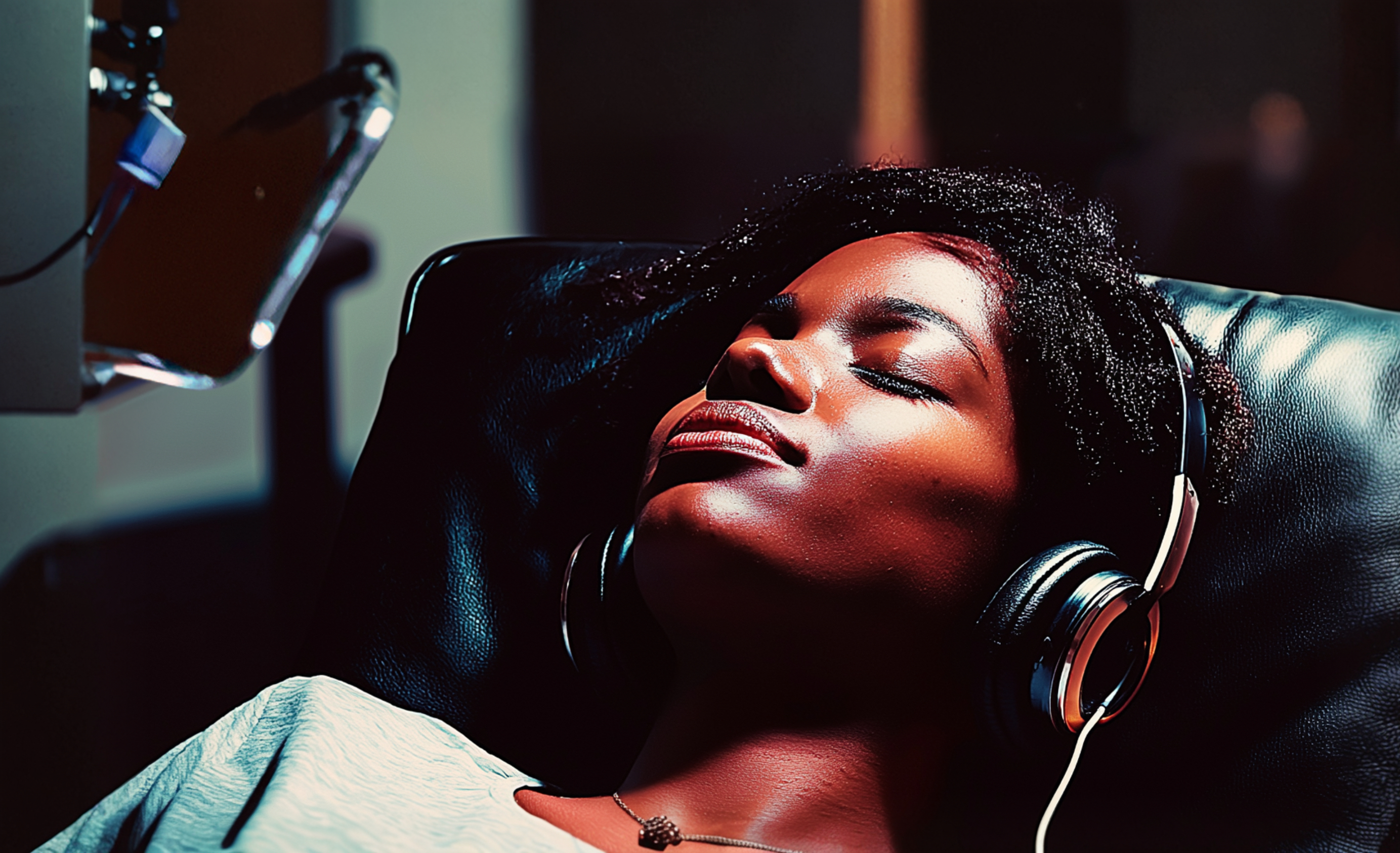
When the Body Can’t Wind Down Anymore
You know the feeling: a long workday, a head full of unfinished thoughts, a body that won’t relax — even hours after you’ve logged off. You want to unwind, but something won’t let you.
This isn’t a willpower problem. It’s a nervous system problem.
People under sustained pressure gradually lose the physiological ability to switch off. The autonomic nervous system — the system that involuntarily governs heart rate, breathing, digestion, and the stress response — gets stuck in a chronically activated state. The solution isn’t more discipline or another wellness app with push notifications. The solution runs through biology.
What Is the Autonomic Nervous System?
The autonomic nervous system (ANS) is the branch of the nervous system that operates below conscious awareness. It automatically regulates all vital functions: heart rate, breathing, blood pressure, digestion, immune response.
The ANS has two opposing branches:
- Sympathetic nervous system — the “accelerator”: activates, mobilizes energy, raises heart rate and cortisol
- Parasympathetic nervous system — the “brake”: calms, promotes recovery, lowers cortisol, activates digestion
Both systems are necessary. The problem arises when the balance tips chronically — when the sympathetic system dominates continuously and the parasympathetic system never gets to fully activate.
Sympathetic vs. Parasympathetic: The Biological Tug-of-War
The sympathetic system is evolutionarily optimized for short-term threats: flight, fight, acute danger. It releases adrenaline and cortisol, raises blood pressure, sharpens the senses — and temporarily suspends non-essential functions like digestion and immune activity.
This is adaptive when a predator is chasing you. It is deeply maladaptive when you’re answering 80 emails a day, sitting through back-to-back meetings, and keeping your brain in a permanent state of low-grade alert.
Chronic sympathetic dominance produces:
- Elevated cortisol (with downstream effects on sleep, weight, and immune function)
- Reduced heart rate variability (HRV) — a reliable marker of diminished adaptive capacity
- Digestive problems, sleep disturbances, persistent fatigue
- Elevated risk of burnout and cardiovascular disease
The parasympathetic system — also called the “rest and digest” system — works in the opposite direction: it lowers heart rate and blood pressure, promotes cellular repair and recovery, activates the immune system, and creates the physiological baseline for concentration, deep sleep, and wellbeing.
The critical challenge: you can’t simply decide to activate the parasympathetic system. You need the right stimulus.
HRV: The Most Important Indicator of Your Nervous System State
Heart rate variability (HRV) is the gold standard for assessing autonomic nervous system balance. It measures the variation in time intervals between individual heartbeats.
Counterintuitively, high HRV is a sign of health and resilience. It indicates that the ANS can flexibly shift between sympathetic and parasympathetic states. Low HRV signals that the system is rigidly locked in sympathetic activation.
Research consistently shows that people with higher HRV:
- Respond more effectively to acute stress
- Sleep more deeply and recover faster
- Demonstrate better cognitive performance and emotional regulation
- Have lower rates of burnout and anxiety disorders
HRV isn’t an abstract research metric — it’s a direct window into your nervous system’s current state. And critically, it is trainable. That’s the good news.
Why Conventional Methods Are Often Too Slow
Meditation, yoga, breathwork — all of these work. Over time. The research is unambiguous: consistent mindfulness practice lowers cortisol, increases HRV, improves sleep quality.
The problem isn’t the method. It’s the timeline.
- Measurable HRV improvements through meditation typically require 8–12 weeks of consistent daily practice according to published studies
- Beginners frequently struggle with what researchers call “mind wandering” — the restless mental chatter that resists stillness
- Under high pressure, compliance drops sharply: people who are burnt out rarely maintain a consistent yoga practice
The nervous system needs a trigger — a stimulus that acts directly on physiology, without requiring someone to first learn to sit still.
How Audiovisual Stimulation Addresses the Nervous System Directly
This is where brainwave entrainment enters — the neuroscientific principle at the core of BE LIGHT.
When the brain is exposed to a rhythmic stimulus — a tone at a specific frequency or a pulsing light — neurons begin to synchronize with that frequency. This phenomenon is known as the Frequency Following Response (FFR), scientifically documented since the 1930s.
For nervous system regulation, two frequency bands are particularly relevant:
- Alpha waves (8–12 Hz): Relaxed wakefulness, reduced stress hormone release, gateway to parasympathetic activation
- Theta waves (4–8 Hz): Deep relaxation, meditative state, maximal parasympathetic dominance
A study by Chaieb et al. (2015) demonstrated that binaural beats in the theta range (6 Hz) produced significant reductions in anxiety and physiological arousal in participants — measurable in heart rate and cortisol levels.
Garcia-Argibay et al. (2019) published a meta-analysis of 22 studies on binaural beats and found consistent effects on stress reduction, anxiety, and mood — including short-duration interventions.
BE LIGHT combines sound frequencies with synchronized light pulses — audiovisual stimulation that engages both sensory channels simultaneously, significantly accelerating brainwave synchronization. The result: the nervous system shifts into parasympathetic mode within minutes — no prior experience required, no mental effort needed.
This is the fundamental difference from traditional relaxation methods: BE LIGHT bypasses the cognitive layer entirely and stimulates the nervous system directly through its own frequency language.
What Happens Physiologically During an 8-Minute Session?
During a BE LIGHT session:
- Minutes 0–2: The brain receives the audiovisual stimulus. Initial synchronization begins.
- Minutes 2–5: Transition into the alpha range. Cortisol begins to drop. Muscles relax involuntarily. HRV increases.
- Minutes 5–8: Full parasympathetic dominance. Breathing slows. Deep rest state — comparable to 20–30 minutes of meditation.
For users who practice regularly, long-term structural HRV improvement is observed: the nervous system essentially learns to shift faster and deeper into parasympathetic activation.
Practical Application: When and How to Use It
Nervous system regulation isn’t a one-time intervention — it’s a practice. The good news: 8 minutes is enough.
Recommended moments:
- Morning, after waking: Prevents starting the day with full sympathetic activation
- Midday break: Actual recovery instead of scrolling. Both take 8 minutes — only one of them helps.
- After work: Creates a clear physiological boundary between work mode and recovery mode
- Before sleep: Primes the nervous system for deep sleep
For teams and organizations: regular short interventions — 3–4 times per week — show the strongest effects on stress reduction and wellbeing in published research. The ecovium case study result (-30% stress levels across 350 employees in 6 months) is built exactly on this principle.
Conclusion
The nervous system isn’t an abstract concept — it’s the foundation of your capacity to perform, recover, and sustain mental health over time. Staying locked in sympathetic dominance has a real cost: exhaustion, poor sleep, reduced concentration, and long-term health consequences.
The way out doesn’t require more willpower. It requires the right stimulus, applied at the right time, with demonstrable physiological effect.
Learn more about the science behind BE LIGHT: /en/science
Start your first session — 8 minutes your nervous system will actually feel: /en/app